How Temporary Email Helps Businesses Comply with GDPR, CCPA, and Other Privacy Laws
How Temporary Email Helps Businesses Comply with GDPR, CCPA, and Other Privacy Laws
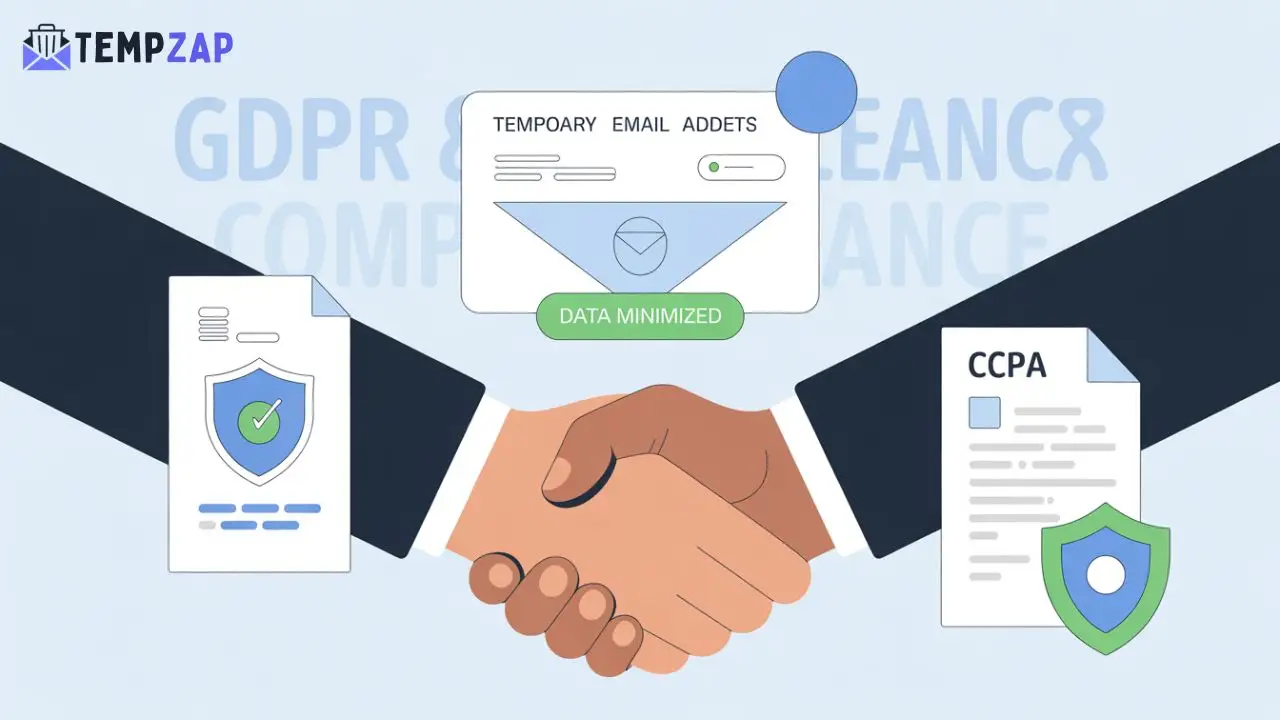
In an era where data privacy regulations are reshaping how businesses collect and handle customer information, compliance is no longer optional—it’s a competitive necessity. The General Data Protection Regulation (GDPR) in Europe, the California Consumer Privacy Act (CCPA), and similar laws worldwide impose strict rules on how companies manage personal data.
One often‑overlooked tool that can help businesses align with these regulations is the temporary email address. While commonly associated with personal privacy, disposable email services like TempZap offer legitimate, compliant ways for organizations to reduce data exposure, minimize risk, and respect user rights.
This article explores how temporary email supports key privacy principles, practical use cases for businesses, and the important limitations every compliance officer should know.
Understanding Key Privacy Principles Under GDPR and CCPA
Before diving into how temporary email helps, it’s essential to understand the core principles that GDPR, CCPA, and similar laws enforce.
1. Data Minimization
Article 5(1)(c) of the GDPR states that personal data shall be “adequate, relevant and limited to what is necessary in relation to the purposes for which they are processed.” The CCPA similarly encourages businesses to collect only the data reasonably necessary to provide services.
2. Purpose Limitation
Data collected for one purpose cannot be repurposed without consent. If a user provides an email for a one‑time download, that email shouldn’t later be used for marketing newsletters unless explicit permission is granted.
3. Storage Limitation
Personal data must not be kept longer than necessary. Both GDPR and CCPA require defined retention periods and secure deletion.
4. Right to Erasure (Right to be Forgotten)
Users can request deletion of their data. Organizations must have mechanisms to honor such requests promptly.
These principles are not just legal boxes to tick—they build trust with customers and reduce the risk of costly data breaches.
The Business Challenge: Collecting Email Addresses
Email remains one of the most common personal identifiers collected by businesses. Whether for newsletter signups, free trial registrations, gated content downloads, or user testing, email collection is ubiquitous.
Yet each email collected creates potential liability:
- Data breach exposure: The more emails stored, the larger the attack surface.
- Compliance overhead: Managing consent, retention, and erasure requests requires resources.
- Reputational risk: Excessive or unauthorized data collection erodes customer trust.
This is where temporary email services can play a strategic role.
How Temporary Email Reduces Data Collection Risks
Temporary email addresses are designed to be short‑lived and require no personal information. When businesses accept them for specific, low‑risk interactions, they automatically embed data minimization and purpose limitation into their processes.
1. Minimizing Stored Data
By allowing users to provide a disposable email for one‑off interactions (e.g., downloading a whitepaper), the business never stores a permanent, identifiable email address. After the temporary inbox expires, the data is gone—no need for deletion requests or long‑term storage.
2. Reducing Data Processing Scope
When a temporary email is used, the business processes only the data necessary for that specific transaction. There’s no temptation to add the address to marketing lists because the address is ephemeral. This aligns perfectly with purpose limitation.
3. Simplifying Retention Management
Since temporary emails self‑destruct, businesses don’t need to build complex data retention schedules for those interactions. The service provider (like TempZap) handles deletion automatically.
4. Enhancing User Privacy
Users retain control over their personal information. They can engage with your business without exposing their primary email—a clear demonstration of privacy‑by‑design principles.
According to the official GDPR text, controllers must implement appropriate technical and organizational measures to ensure data protection. Accepting temporary email for appropriate use cases is a simple but effective measure.
Real‑World Use Cases: Where Temporary Email Fits a Compliance Strategy
Businesses across industries can leverage temporary email to reduce compliance burden while maintaining operational efficiency.
Testing and QA
Developers and QA teams often create test accounts with dummy email addresses. Using a service like TempZap ensures no real user data enters the testing environment, reducing the scope of GDPR/CCPA obligations for test data.
Gated Content and Lead Magnets
When offering free eBooks, webinars, or tools, requiring an email address is common. By accepting temporary emails, you collect only what’s necessary for that immediate access. If the user later chooses to become a paying customer, you can ask for a permanent email at that point.
Beta Programs and Early Access
Beta testers often need to verify their email, but may not want to commit their real address. Offering temporary email as an option respects their privacy while still allowing you to manage the testing group.
Customer Support Verification
Some support interactions require email verification but don’t need long‑term retention. Temporary email can serve as a one‑time contact channel without adding to your customer database.
For a deeper look at how temporary email compares to real email in business contexts, check out our article: Temporary Email vs Real Email.
Important Disclaimer: Not a Complete Compliance Solution
While temporary email is a valuable tool, it is not a substitute for a comprehensive data protection program. Businesses must still:
- Maintain a clear Privacy Policy that explains how data is collected and used.
- Obtain valid consent where required.
- Implement security measures to protect all data they store.
- Honor user rights (access, rectification, erasure) for any permanent data held.
Temporary email should be viewed as one element of a privacy‑by‑design approach—not a cure‑all. For official guidance, refer to resources like the UK ICO’s Guide to Data Protection or the California Attorney General’s CCPA page.
Best Practices for Using Temporary Email in Your Business
To integrate temporary email into your compliance framework effectively, follow these guidelines:
1. Define Appropriate Use Cases
Create an internal policy that specifies when accepting a temporary email is acceptable (e.g., test accounts, content downloads) and when a permanent email is required (e.g., paid accounts, financial transactions).
2. Communicate Clearly with Users
In your signup forms, consider adding a note: “Prefer privacy? You can use a temporary email like TempZap to access this resource without sharing your personal address.”
3. Avoid Storing Temporary Emails Long‑Term
If a user initially uses a temporary email and later upgrades to a permanent account, ensure you don’t retain the temporary address beyond its useful life. Purge it from your databases to stay compliant with storage limitation.
4. Use Temporary Email for Your Own Internal Compliance Testing
Your compliance team can use TempZap to test how your systems handle erasure requests, data exports, and consent management without exposing real user data.
5. Stay Updated on Regulatory Changes
Privacy laws evolve. Regularly review your data collection practices to ensure they remain compliant. Tools like temporary email can help you adapt quickly to new requirements.
Conclusion
Privacy regulations like GDPR and CCPA are here to stay, and they demand a shift toward less intrusive data collection. Temporary email services, when used appropriately, offer a practical way to align with core principles such as data minimization and purpose limitation.
By incorporating TempZap into your business workflows—whether for testing, gated content, or customer support—you can reduce compliance overhead, enhance user trust, and focus on what matters most: delivering value.
Remember, temporary email is a tool, not a total compliance solution. Pair it with a strong privacy program, transparent policies, and a commitment to data protection to build a business that respects user privacy and stays ahead of regulatory demands.
Disclaimer: This article is for informational purposes only and does not constitute legal advice. Organizations should consult with qualified legal professionals to ensure full compliance with applicable privacy laws.