Temporary Email vs Real Email – Key Differences Explained
Temporary Email vs Real Email – Key Differences Explained
In this blog we will cover Temporary Email vs Real Email – Key Differences Explained, Email communication has become an essential part of daily internet usage. Whether you are signing up for a website, communicating with colleagues, or receiving important notifications, email services play a major role in online interactions.
However, not all email services are the same. There are two main types of email systems used today:
Temporary email services
Real or permanent email services
Understanding the difference between temporary email and real email can help you decide which option is best for different online activities.
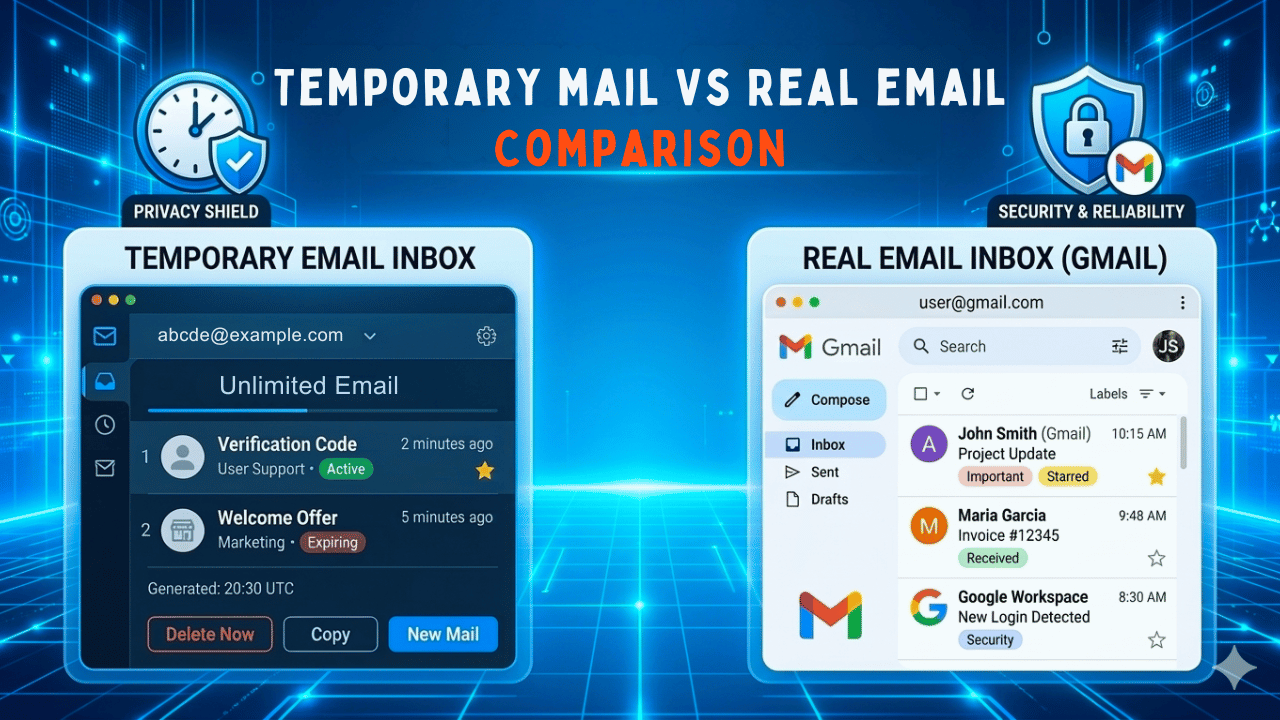
In this guide, we will compare temporary email services like TempZap with traditional email providers such as Gmail.
What is Temporary Email?
A temporary email, also known as disposable email or temp mail, is an email address created for short-term use. These email addresses usually exist for a limited time and are automatically deleted after a certain period.
Temporary email services allow users to generate an email address instantly without registration or personal information.
For example, with TempZap, users can instantly create a temporary email address and start receiving emails immediately.
Key Characteristics of Temporary Email
No registration required
Automatically generated email address
Messages stored temporarily
Emails deleted after a short period
Used mainly for quick tasks like signups
Temporary email generators are widely used to avoid spam emails and protect online privacy.
What is Real Email?
A real email address is a permanent email account created through traditional email providers.
Services like Gmail require users to register an account using personal information such as a name, password, and recovery options.
Once created, a real email account can be used for long-term communication and storage of important messages.
Key Characteristics of Real Email
Requires account registration
Permanent inbox storage
Suitable for personal and business communication
Used for important services and account management
Real email services are essential for professional communication and managing long-term digital accounts.
Temporary Email vs Real Email – Key Differences
Below is a clear comparison between temporary email services and traditional email providers.
| Feature | Temporary Email | Real Email |
|---|---|---|
| Registration | Not required | Required |
| Email lifetime | Short-term | Permanent |
| Privacy | High anonymity | Moderate |
| Spam risk | Very low | Higher |
| Email storage | Temporary inbox | Long-term storage |
| Best use case | Signups and verification | Personal or business communication |
This comparison highlights why many users prefer temporary email services for quick tasks online.
Advantages of Temporary Email
Temporary email services provide several benefits for users who want to protect their personal inbox.
1. Spam Protection
Using a temporary email prevents promotional and marketing emails from reaching your primary inbox.
2. Instant Email Creation
Temporary email generators create email addresses instantly without requiring a signup process.
3. Better Privacy
Users can sign up for websites without revealing their personal email address.
4. Easy Website Testing
Developers and testers use temporary emails to test signup and verification systems.
Advantages of Real Email
While temporary email is useful for short-term tasks, real email services are essential for many important activities.
Long-Term Communication
Permanent email accounts allow users to send and receive messages over long periods.
Secure Account Management
Many important services require a permanent email address for account recovery and authentication.
File Storage and Attachments
Real email services allow users to store emails, documents, and attachments securely.
Integration with Other Services
Many platforms integrate with traditional email providers for notifications and communication.
When Should You Use Temporary Email?
Temporary email services are best used in situations where privacy and convenience are important.
Common uses include:
Signing up for websites
Accessing free trials
Downloading resources
Joining forums or communities
Testing applications or websites
Using TempZap for these tasks helps protect your primary email inbox from spam and unwanted marketing messages.
When Should You Use Real Email?
Real email services are necessary for activities that require long-term communication or security.
You should use a real email address for:
Banking and financial accounts
Work or business communication
Personal online accounts
Social media platforms
Account recovery and password resets
Temporary email services should not be used for sensitive accounts.
Why Many Users Prefer Temporary Email for Signups
One of the most common uses of temporary email services is website registration.
Many websites require users to verify their email address before creating an account. Using a temporary email allows users to complete the verification process without exposing their personal inbox.
With TempZap, users can generate a disposable email instantly and receive verification emails within seconds.
This simple process helps reduce spam and protects personal email privacy.
How to Use TempZap Temporary Email
Using TempZap is simple and requires only a few steps.
Step 1
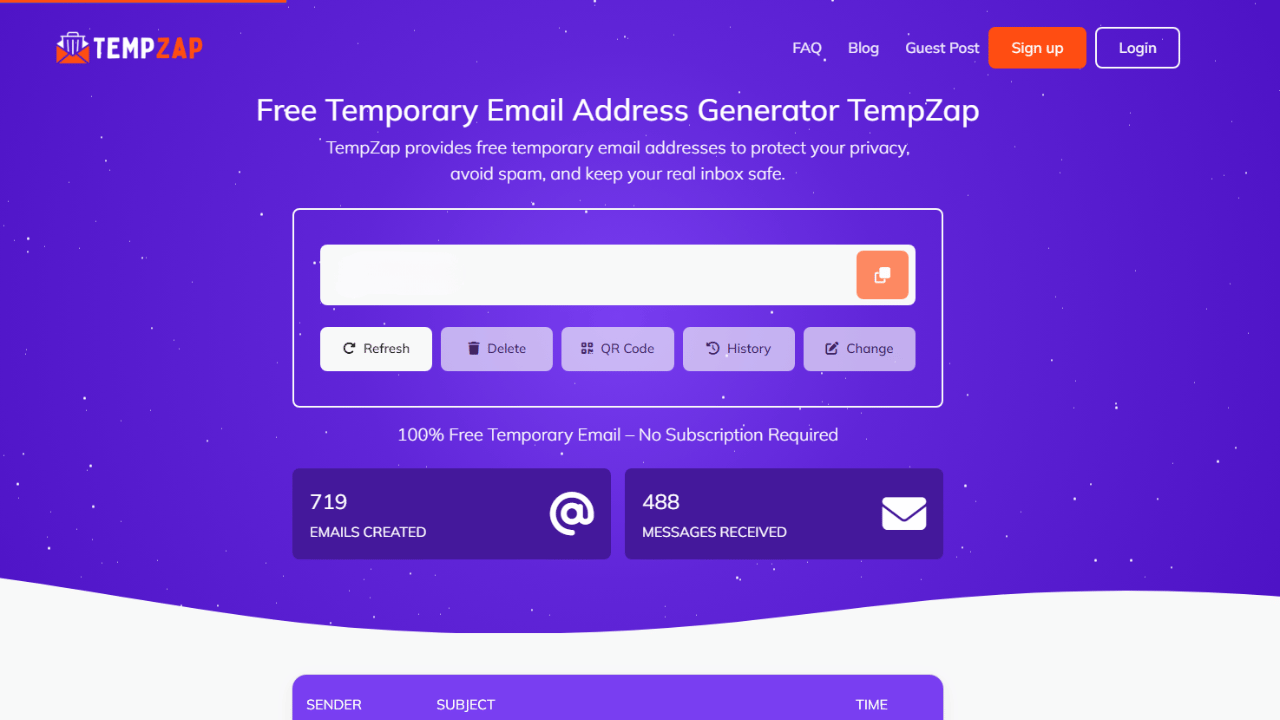
Visit the TempZap homepage.
Step 2
A temporary email address will be generated automatically.
Step 3
Copy the email address and use it for website registration.
Step 4
Return to the temporary inbox to receive verification emails instantly.
This process takes only a few seconds and does not require creating an account.
Final Thoughts
Understanding the difference between temporary email and real email services can help users choose the right solution for different online tasks.
Temporary email services provide privacy, spam protection, and quick access for short-term activities such as website signups or testing online platforms.
Traditional email providers like Gmail remain essential for long-term communication, business use, and managing important accounts.
If you need a fast and simple disposable email solution, TempZap allows you to generate a temporary email address instantly and receive messages without exposing your personal inbox.
Using the right type of email for the right task helps create a safer and more organized online experience.